
-
基础教育
- 教材:
-
- 全部
- 中国地图出版社
- 人教版
- 人教版2012
- 人教版2013版
- 人教版PEP(3年级)
- 人教版义务
- 人教版新课标
- 人教版新起点(1年级)
- 人教版(Go for it)
- 人教版(三年级起点)
- 人教版(三年级起点)2012-2013
- 人教版(版本不明)
- 人教社2016年新编教材
- 冀教版
- 冀教版(三年级起点)
- 北京版
- 北师大版
- 北师大版(2016)
- 北师大版(1年级)
- 北师大版(3年级)
- 北师版2013
- 华东师大版
- 外研社版
- 外研社(三年级起点)
- 外研社(广西专用)
- 广州新版(三年级起点)
- 广州版
- 开心学英语
- 教育科学(3年级起点)
- 教育科学(广州版)
- 新华东师大版
- 新起点英语
- 朗文英语
- 河北版
- 湘少版(3年级起点)
- 牛津上海版
- 牛津上海版(深圳新版)
- 牛津英语
- 粤教版
- 苏教版
- 语文S版
- 语文版
- 首师大版
- 香港现代版
- 齐齐学英语
- 高等教育
- 职业教育
-

本体创作工具protege4.1 普通类
本体创作工具protege3.4.4
-

本体创作工具protege3.4.4 普通类
本体创作工具protege
-
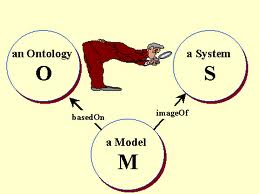
本体协作中的语义一致性PPT 普通类
本体协作中的语义一致性PPT
-
.jpg)
一个礼物换回另一个礼物 普通类
一个礼物换回另一个礼物
-

A demands-resources model of work pressure 普通类
This paper presents an initial test of the group task demands-resources (GTD-R) model of group task performance among IT students. We theorize that demands and resources in group work influence formation of perceived group work pressure (GWP) and that heightened levels of GWP inhibit group task performance. A prior study identified 11 factors relating to the task, group, individual, or environment as source factors to GWP. We extended this research by creating and validating scales for each source factor within an integrated GWP instrument. We then applied the instrument in an initial test of the GTD-R model. Results show the GTD-R model provides good predictions of GWP and group task performance. In addition we find GWP, task complexity, and time pressure factors to be higher in IT tasks vs. non-IT tasks described by our student participants. The findings extend demands-resources research from its prior focus on job burnout and exhaustion in individual tasks to incorporate less-intense pressure levels and group task contexts.
-
Are digital natives a world-wide phenomenon 普通类
In 2001 Marc Prensky coined the phrase ‘digital natives’ to refer to the new generation of students who have grown up surrounded by technology. His companion papers spurred large amounts of research, debating changes that are required to curricula and pedagogical models to cater for the changes in the student population. This article reports on a study conducted in 2009 of more than 290 first year students at two South African universities. In this study, students were asked about their access to and use of technology. The results portrayed a heterogeneous student population, with varying levels of access to and use of most technologies. One of Prensky’s key features of a digital native is their excitement with Web 2.0 based technologies. Participants in this study however, appear not to use such technologies, and to not be interested in using them in their studies. One tool that students had high levels of access to (98.1%), and use of is the mobile phone. Out of all uses of technology surveyed, tasks involving the mobile phone were ranked in the top two positions. Also when asked to rank different uses of technology particularly for their studies, three of the top five uses relied on a mobile phone.
-
Connecting schools community 普通类
Community and family involvement in schools is a well-documented antecedent to student success; yet, educators often find it challenging to increase involvement with parents and members of diverse communities. One solution is to use information and communication technology (ICT) as a bridge between schools, families, and the community. This research first presents a conceptual framework for uniting schools, families, and community members using ICT and then uses statewide data collected in Florida from the 2003–2004 to 2006–2007 school years to investigate significant trends in how schools communicate with, involve, and provide ICT access and education for community and family members. Results were analyzed at each school level, as well as by the differences between high and low socio-economic status (SES) schools. Findings indicate that during the study schools at every level and SES group significantly increased their contributions for ICT access and education of families and communities. However, high schools serving the most economically advantaged students provided the most ICT contributions to their families and communities. On the other hand, in support of bridging the digital divide, low SES elementary and middle schools provided significantly more contributions for ICT access and education of their community and parents, than their high SES counterparts. Recommendations and implications are provided.
-
Computer-supported team-based learning 普通类
The benefits of teamwork and collaboration have long been advocated by many educational theories, such as constructivist and social learning models. Among the various applications of collaborative learning, the iterative team-based learning (TBL) process proposed by Michaelsen, Fink, and Knight (2002) has been successfully used in the classroom without computer support. This paper describes the implementation and evaluation results of a classroom application of the TBL process, which was modified to include computer mediation. We call this process computer-supported team-based learning (CS-TBL). This work extends learning in small teams from the traditional classroom to the hybrid classroom where students meet both face-to-face and online by emphasizing the importance of online team interactions. The outcomes are assessed through an evaluation model that considers the impact of motivation, enjoyment and team contributions on learning outcomes. The study results indicate that motivation influences the relationship between team interactions and perceived learning. Enjoyment is affected by motivation and perceptions of team members’ contributions, with the implication that students who perceive that the team interactions are adding value to their education will better enjoy learning and will experience higher-level learning outcomes.
-
The identification implementation 普通类
Critical user interface design features of computer-assisted instruction programs in mathematics for students with learning disabilities and corresponding implementation guidelines were identified in this study. Based on the identified features and guidelines, a multimedia computer-assisted instruction program, ‘Math Explorer’, which delivers addition and subtraction word problem-solving instruction for students with learning disabilities at the early elementary level, was designed and developed. Lastly, usability testing was conducted to assess whether Math Explorer was well-designed in terms of the interface for students with learning disabilities. Given the results of the usability testing, this study corroborated the fact that the critical user interface design features and guidelines in mathematics computer-assisted instruction programs would be essential for facilitating the mathematical learning of students with learning disabilities. Implications for practice and future research were discussed.
-
In the mind and in the technology 普通类
The focus of research into the use of the interactive whiteboard (IWB) in the classroom has been largely in relation to teacher–pupil interaction, with very little consideration of its possible use as a tool for pupils’ collaborative endeavour. This paper is based upon an ESRC-funded project,1 which considers how pupils use the interactive whiteboard when working together on science-related activities. It provides an analysis of video and other data from science lessons in UK Years 4 and 5 primary classrooms (pupils aged 8–10 years). Concentrating on a series of lessons constructed by three (out of 12) of the project teachers, together with their written and spoken commentaries, it takes each set of lessons as a case for study and comparison. This paper focuses in particular on the nature of the ‘vicarious presence’ of the teacher evident in the group interactions at the board. We address the following questions: How is the teacher’s vicarious presence evident in the work of pupils at the interactive whiteboard? How does this presence influence the behaviour of pupils engaged in science activities? In this account, we suggest that the teacher remotely mediates the activity of the pupils at the board in two specific and interlinked ways. Firstly, the vicarious presence of the teacher seems to be in the minds of pupils, enabling them to appropriate and use introduced rules and procedures, in this case in relation to group talk. Secondly, it is in the ways in which the constructed task environment on the IWB guides and mediates the pupils’ actions, enabling them to connect with, interpret and act upon the teacher intentions for the task. Here, the teacher’s vicarious presence is in the technology. We conclude that the IWB can provide both a tool and an environment that can encourage the creation of a shared dialogic space within which co-constructed knowledge building can take place. However, this only occurs where there is active support from the teacher for collaborative, dialogic activity in the classroom and where the teacher is able to devise tasks that use board affordances to promote active learning and pupil agency.